What Kind of Support Exists After a Spouse Dies
A short, calm list of what to look into after losing a spouse, before anything else feels urgent.
6 min readPublished By Karen Ostrowski
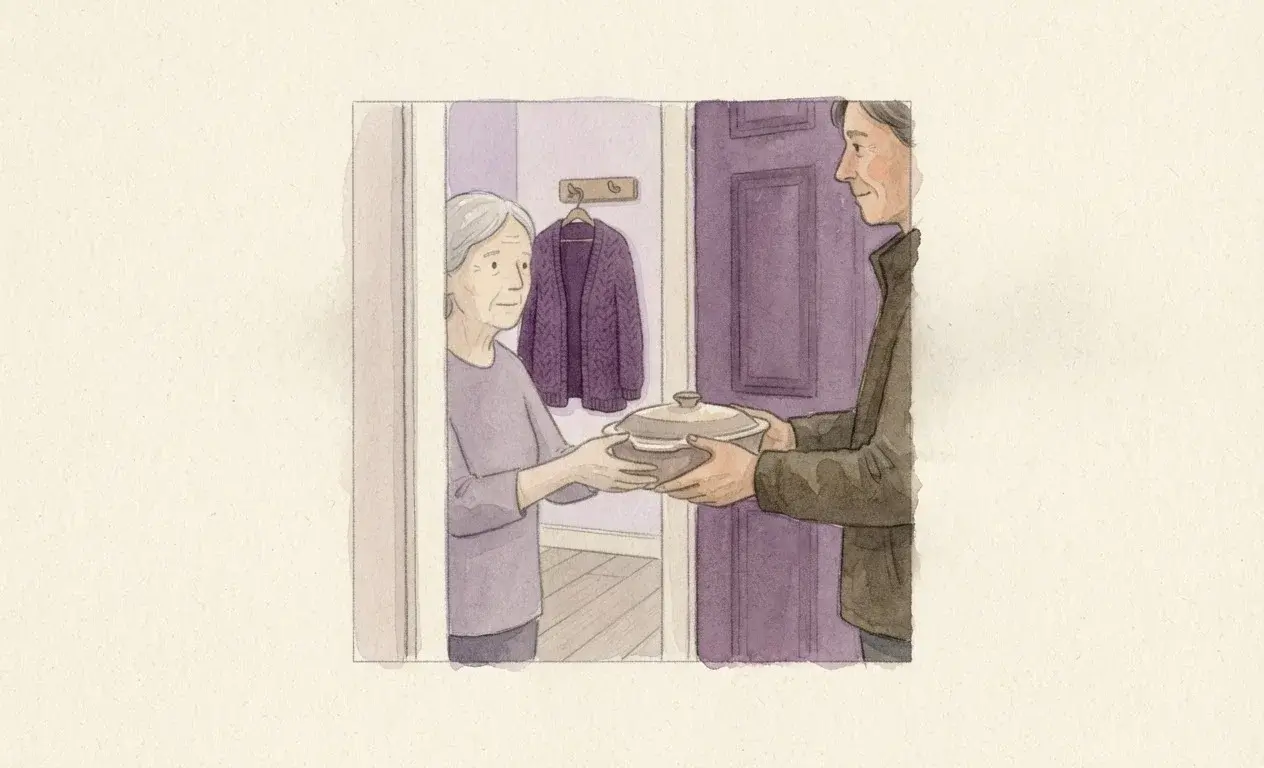
There’s a particular kind of exhaustion that comes after losing a spouse, one that has nothing to do with paperwork and everything to do with the sheer weight of everything else. And yet paperwork finds its way in anyway — forms with deadlines, letters from institutions you’ve never dealt with before, phone calls that require you to say out loud, again, that your husband or wife has died. It’s a strange and cruel juxtaposition, and it’s completely normal to feel unable to face it.
This isn’t a guide telling you what to do today. It’s closer to a map you can glance at when you’re ready, so that when something crosses your desk — a letter, a phone call, a question from someone helping you — you have a rough sense of where it fits. Nothing here is urgent in the way that grief is urgent. Most of these categories will still be waiting for you next week, next month, or in some cases next year.
Why this moment calls for a different kind of checklist
Most life transitions come with a single dominant category to think about. A new job means thinking about health insurance. A new baby means thinking about a handful of family programs. Losing a spouse is different because it touches nearly every category at once — income, health coverage, retirement, taxes, housing, sometimes even your legal name on shared accounts. There’s no single office or website that handles “spouse died,” because no single system was built around that reality. Instead, there are several separate systems that each have their own version of what happened to you, and each one needs to be told, on its own timeline, in its own way.
That’s part of why this feels so disorienting. You’re not failing to keep up with one process — you’re being asked to notice that several unrelated processes now apply to you, often without anyone clearly pointing that out. The goal of a list like this isn’t to make you feel behind. It’s to give you categories to recognize later, when your mind has more room, so you’re not starting from a blank page.
It also helps to know that very little here is truly time-sensitive in the way bills are. Some benefits look back over a period of months, and some considerations shift depending on timing, but the systems involved are generally used to death, loss, and delay. You are not the first widow or widower to take time before making a call.
Survivor benefit categories to know about
The phrase “survivor benefits” covers a wider range of things than most people expect, and they tend to fall into a few general buckets.
- Government retirement and disability survivor programs. If your spouse had a work history, there may be a survivor component tied to programs most people only associate with retirement. These are separate from anything private, and they exist specifically because a spouse died — worth knowing about even if retirement felt far away for both of you.
- Pension survivor provisions. If your spouse had a pension through an employer, union, or military service, many of these plans include a built-in survivor option that may already have been elected years ago, sometimes without much discussion at the time. It’s worth finding out whether one exists, even if you don’t remember choosing it.
- Life insurance. This includes any private policy your spouse held individually, but also group life insurance that often comes bundled quietly with employment — the kind of coverage that shows up on a pay stub and is easy to forget existed at all.
- Retirement accounts with named beneficiaries. Workplace retirement accounts and individual retirement accounts typically pass to whoever was listed as beneficiary, separate from whatever a will says. It’s worth locating these accounts and finding out who was named, since this process runs on its own track entirely.
- Veterans’ survivor programs. If your spouse served in the military, there is a whole category of survivor-related support connected to that service, distinct from other retirement or disability programs.
You don’t need to sort out which of these apply to your situation right now. The point of this list is just to recognize the names when they appear in a letter or a conversation, so they register as familiar rather than as one more unknown thing to research from scratch.
Health coverage categories that may shift
Health insurance is one of the areas most likely to change after a spouse dies, and also one of the areas where people are most likely to be caught off guard, because coverage that felt permanent can shift on a schedule that has nothing to do with grief.
- Employer-sponsored coverage through your spouse’s job. If you were covered under your spouse’s workplace health plan, that coverage is generally tied to their employment, which means it may end or change following a death. There are usually options to continue some version of coverage for a period of time, though the details and costs vary by employer.
- Employer-sponsored coverage through your own job. If you have coverage available through your own employer, a spouse’s death is typically the kind of event that allows you to make changes outside of the usual enrollment window, since it counts as a significant change in circumstances.
- Marketplace or individual health plans. If neither of you had coverage through an employer, losing a spouse can still open a window to adjust an individual plan, particularly if you were previously covered as a dependent on a spouse’s individual policy.
- Medicare considerations. If you or your spouse were near or past the age where Medicare becomes relevant, a death can affect how premiums, coverage, or enrollment timing work for the surviving spouse. This is a category worth flagging for a closer look rather than assuming nothing has changed.
- Dental, vision, and supplemental coverage. These smaller policies are easy to overlook entirely, but they often ride along with a larger health plan and can lapse quietly at the same time the main coverage does.
If you’re not sure which of these applied to your household, checking recent pay stubs, insurance cards, or a folder of benefits paperwork is usually more useful than trying to remember conversations from years ago. Many people genuinely don’t know the details of a spouse’s coverage until they’re forced to look.
When people usually start looking into this
There’s no single right time to begin sorting through any of this, and the range of “normal” is wider than most people assume. Some people start making calls within the first couple of weeks, often because someone else — a family member, a friend, an employer’s human resources office — pushes the process along on their behalf. Others don’t open a single envelope for months, and that’s not a mistake either.
That said, a few general patterns are worth knowing simply so you’re not blindsided by them:
- Health coverage changes tend to have the shortest windows attached to them, which is part of why they’re worth identifying early, even if you decide to deal with them later.
- Survivor benefits tied to government programs and pensions tend to be more forgiving of delay, though there can be advantages to timing in some cases that are worth asking about when you’re ready.
- Life insurance and retirement account beneficiary claims generally don’t disappear if you wait, but they also don’t process themselves — someone has to initiate contact eventually.
Many people describe a kind of second wave a few months in, once the immediate aftermath — services, visitors, the first wave of casseroles and phone calls — has passed and the house gets quiet. That quiet is often when the paperwork starts to feel possible instead of impossible. If that’s where you are, this list is meant to meet you there: not as a set of deadlines, but as a set of names you can recognize when you’re finally ready to start making calls.